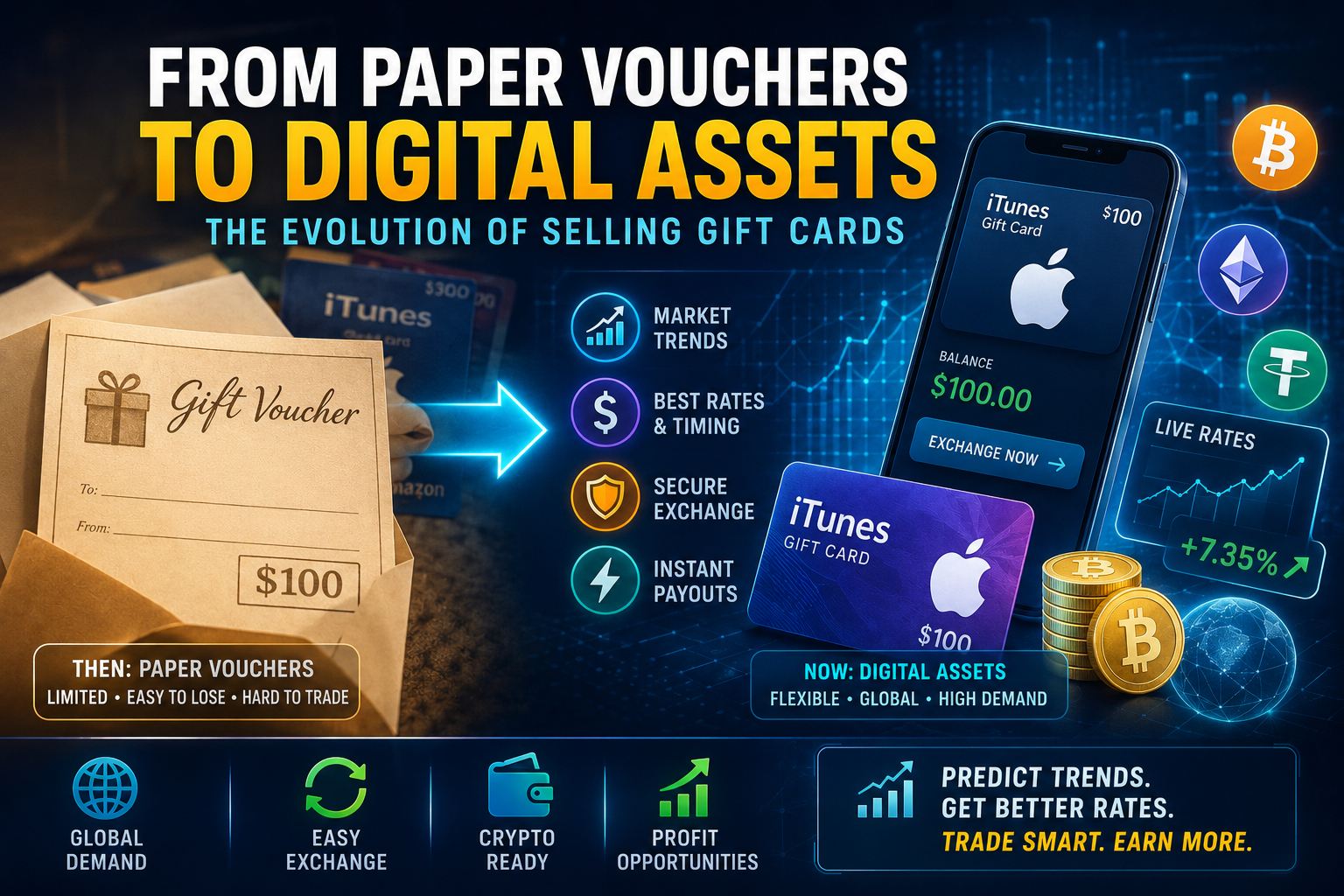
There was a time when gift cards were literally paper slips tucked inside birthday envelopes. Easy to lose. Easy to forget. And honestly? Most people never imagined they would someday become tradeable digital assets linked to cryptocurrency markets.
But here we are.
Today, millions of people don’t just redeem gift cards — they trade them, exchange them, and even use them to enter the crypto economy. That shift completely changed how people think about value. Especially with Apple and iTunes cards.
And if you’ve noticed how rates suddenly rise or crash overnight, you’re not imagining it. There’s actually a pattern behind it.
Let’s break it down properly.
Why did gift cards suddenly become “digital assets”?
Short answer? Flexibility.
Traditional gift cards were originally designed for shopping convenience. But digital marketplaces transformed them into something more liquid — almost like mini currencies.
Platforms like sell your gift cards marketplaces made it possible for users to convert unused balances into cash or crypto within minutes. That changed everything.
Now people use gift cards for:
- Crypto trading entry points
- International payments
- Quick cash conversion
- Arbitrage opportunities
- Online subscriptions and gaming
And among all categories, Apple-related cards remain one of the strongest markets globally.
So why are iTunes gift cards still in huge demand?
Honestly, Apple’s ecosystem plays a massive role.
People buy apps, music, storage subscriptions, gaming credits, streaming services — all through Apple accounts. Because demand stays consistently high, traders actively sell itunes gift card balances every day across global exchanges.
But demand alone isn’t the full story.
Rates also depend on:
| Factor | Impact on Rates |
| Country demand | High-demand regions raise prices |
| Seasonal trends | Holidays often increase rates |
| Crypto market volatility | Bitcoin surges affect exchanges |
| Supply volume | Too many sellers reduce value |
| Fraud risk | Higher risk lowers rates |
A $100 card today may trade very differently next month.
That’s where trend prediction becomes important.
The Science of Selling iTunes Gift Cards: How to Predict Market Trends and Rates
This part gets interesting.
Most beginners think rates are random. They aren’t.
Professional traders quietly monitor behavioral patterns almost like stock analysts.
Here’s what experienced sellers usually watch:
1. Bitcoin price movement
When Bitcoin spikes, gift card trading activity often increases too. Many users actually buy bitcoins with itunes gift card during bullish crypto periods.
More crypto demand = stronger card exchange rates.
2. Regional shortages
Certain countries experience temporary shortages of Apple credits because of payment restrictions or banking limitations.
When that happens, rates jump quickly.
Nigeria, Ghana, India, and parts of Southeast Asia often show these fluctuations.
3. Holiday behavior
Rates usually rise during:
- Christmas season
- Black Friday
- New iPhone launches
- Gaming release periods
- Back-to-school promotions
People spend more digitally during those periods.
Simple economics.
Quick Tip:
If you monitor rates for even 2–3 weeks consistently, you’ll start noticing repeating patterns yourself.
How do experienced traders avoid bad exchange rates?
Patience.
Seriously.
A lot of first-time sellers panic and exchange immediately. Smart traders wait for favorable demand windows.
They also compare:
- Platform reliability
- Payment speed
- Verification process
- Fraud protection
- Historical rate consistency
That’s why trusted platforms matter more than “highest advertised rate.”
Because high rates mean nothing if payouts fail.
Is iTunes Gift Card Trading Still Worth It in 2026?
A lot of people ask this lately. Fair question.
The short answer: yes — but only if you understand timing, platform reputation, and market cycles.
The market is more mature now, which means smarter users usually win.
Quick Specification Snapshot
| Feature | Details |
| Market Demand | Very High |
| Best Use Case | Crypto conversion & cash exchange |
| Risk Level | Moderate |
| Fastest Payout Method | Crypto wallets |
| Popular Exchange Type | Peer-to-peer & automated platforms |
Reasons to Buy
- Strong global demand
- Easy digital transfer
- Useful for crypto entry
- High liquidity in many regions
- Consistent resale opportunities
Reasons to Avoid
- Scams on unverified exchanges
- Sudden rate fluctuations
- Region-locked cards
- Delayed payment risks on weak platforms
Best Deals / Price Note
Typically, US-issued Apple cards maintain better resale value than region-specific versions. Timing your exchange during crypto rallies can also improve returns noticeably.
What makes Apple gift card exchanges different from other cards?
One word: stability.
Compared to gaming or retail cards, Apple products maintain long-term digital demand. That’s why many users prefer an itunes gift card exchange over lower-demand alternatives.
Also, Apple cards are easier to verify digitally, which reduces fraud risks slightly.
Not completely, though. Scammers still exist everywhere online.
That’s why experienced users stick with platforms that offer:
- Escrow protection
- Transparent rates
- Instant confirmations
- Verified support systems
Can you really predict future gift card rates accurately?
Accurately? Not always.
But directionally? Yes.
Think of it like weather forecasting.
You may not predict the exact number tomorrow, but you can often identify whether rates are likely rising or falling.
Here’s a simple rule many traders follow:
Higher crypto excitement usually increases gift card exchange activity.
Not guaranteed. But surprisingly common.
And once you start tracking patterns weekly, market behavior becomes much easier to read.
Why digital exchanges replaced paper vouchers completely
Convenience won.
Paper vouchers required physical stores, manual verification, and geographic limitations. Digital systems removed all of that instantly.
Now someone in India can exchange a US Apple card online within minutes.
That level of accessibility turned gift cards into something much bigger than retail products.
They became transferable digital value.
And honestly? We’re probably still early in that evolution.
FAQs
How do you safely exchange an Apple gift card online?
Use verified platforms with transparent rates, active customer support, and strong reputation history. Avoid random social media traders offering unrealistic prices.
Is it profitable to trade gift cards during Bitcoin rallies?
Often, yes. Increased crypto demand can improve exchange activity and rates. Timing matters more than most beginners realize.
Why do gift card rates change daily?
Rates depend on supply, regional demand, fraud risk, and crypto market behavior. It’s a live market — not a fixed pricing system.
Can beginners successfully trade gift cards?
Absolutely. But learning basic market timing and choosing reliable exchanges makes a huge difference early on.
Digital gift cards started as simple convenience tools. Now they sit somewhere between fintech, online commerce, and decentralized finance.
A weird evolution, honestly.
But it makes sense.
When people can instantly convert digital balances into crypto, cash, or international purchasing power, gift cards stop being “just gifts.”
They become assets.