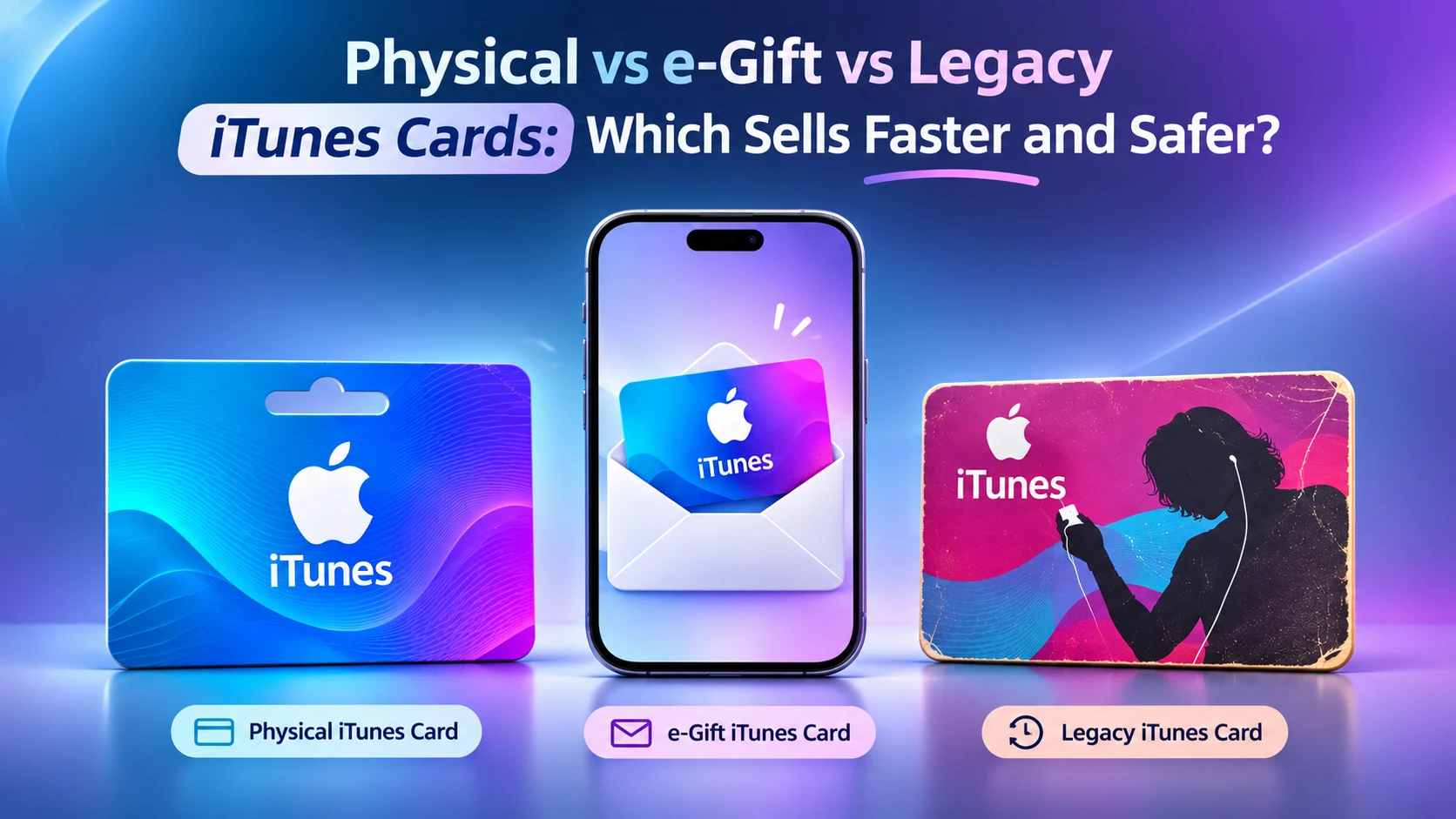
You’ve got three Apple cards and one big question: which one turns into cash the fastest? A plastic card left over from a birthday, an e-gift code buried somewhere in your inbox and an old iTune gift cards with a faded back may all carry the Apple name, but they don’t behave the same way the moment you try to sell itune gift card for cash. The format you’re holding quietly decides how quickly your card is verified, how much can go wrong along the way and how smooth your Apple gift card exchange feels from the first click to the final payout. This guide puts physical, e-gift and legacy iTunes cards side by side, explains what really drives speed and safety, and shows you how to sell your gift cards on Exchangerland without leaving money on the table.
Why does card format matter when you sell an itune gift card?
Because every exchange has to confirm the same three things before it pays you: the code is real, the balance matches what you entered and the card’s region fits the account it can be used on. The format changes how easy each check is. A physical card has a printed code that can be damaged or never activated, an e-gift card has a digital code that can be copied or redeemed before you get to it, and a legacy iTunes card is older, so it’s more likely to carry a partial balance or a region mismatch. say that Apple Gift Cards, App Store & iTunes gift cards and unused Apple Account balance can’t be redeemed or returned for cash, except where the law requires it. That is exactly why an unredeemed card has real value on the open market, while a redeemed one is just account balance.
Quick Tip: Leave the code untouched until your payout is confirmed. No scratching “just to check” and no testing it on your own Apple Account.
Physical vs e-gift vs legacy iTunes: the quick comparison
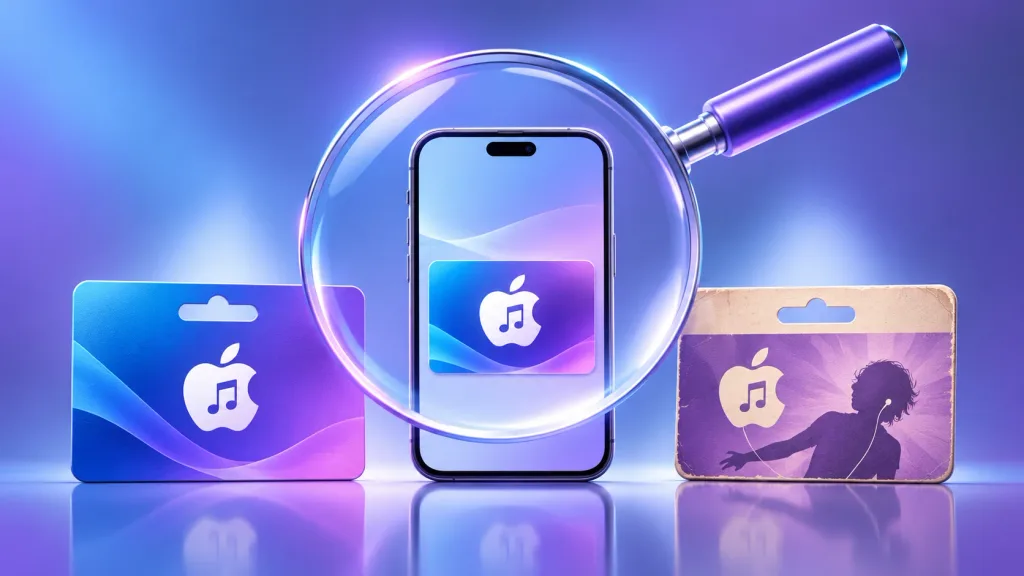
Here is how the three formats usually compare when you sell your gift cards through an online exchange.
| Card type | Typical speed | Safety level | Main risk | Best for |
| Physical Apple Gift Card | Fast once code and balance are verified | High if untouched and undamaged | Scratched, tampered or inactive cards | Sellers who want to inspect the card first |
| e-Gift (digital code) | Often the quickest, since the code is ready to enter | Good when it came from a trusted source | Already redeemed, forwarded or wrong region | Same-day sales |
| Legacy iTunes / App Store card | Fine when the balance is valid | Needs the most checking | Partial balance and region mismatch | Forgotten cards found in drawers and wallets |
Note: Exact speed always depends on verification, balance, region and current demand, so treat this table as a guide, not a guarantee.
How does each card type behave in an Apple gift card exchange?
Physical Apple gift cards: the easiest to inspect
Physical cards feel safe because you can see exactly what you’re selling: check the packaging, confirm the code hasn’t been scratched off or tampered with, and prove the card is genuinely yours. They usually clear smoothly when the code is clear and the card was properly activated at the till, but a damaged or hard-to-read code slows verification and an inactive card will simply fail the balance check. Typing a long code by hand also leaves room for mistakes, so read it twice before you submit it.
e-Gift cards: the speed champion, with one catch
Digital cards are the sprinters of any Apple gift card exchange. The code is already in your inbox, you can copy and paste it in seconds and there is nothing to scan or ship, which is why many people use them when they want to sell your gift cards the same day they arrive. The catch is that a digital code is just as easy to forward or redeem by mistake, so confirm the balance hasn’t been used before you submit it, keep the original email until your payout lands, and treat codes from unknown senders with extra suspicion.
Legacy iTunes cards: still valuable, but check twice
Older App Store & iTunes cards generally still add value to an Apple Account, and plenty of them are sitting forgotten in drawers and old wallets, which makes them an easy source of unused money. They also need the most homework: older cards are more likely to be partially used, a card issued for one country won’t work on another country’s account, and worn or faded codes cause entry errors. Confirm the balance and region first, then send it through a verified route such as the Exchangerland iTunes gift card page.
So which one really wins?
e-Gift cards are usually the fastest, physical cards are the easiest to verify by eye and legacy iTunes cards need the most checking. But the real winner isn’t a format, it’s condition. A clean, unredeemed, correct-region card of any type will almost always clear faster and more safely than a doubtful card of the “best” type, so spend your effort on the checks instead of picking a favourite.
How does an Apple gift card exchange work on Exchangerland?
The process on Exchangerland is built to stay the same whichever card you hold, so you can sell Apple gift card for cash or crypto in a handful of clear steps. You pick your Apple or iTunes card, enter the amount and code, see your quote and choose a payout, wait for verification and get paid. Cash-style payouts include bank transfer, PayPal and UPI, and if you’d rather go digital you can take Bitcoin, Ethereum, USDT and other supported crypto instead.
| Step | What happens |
| 1 | Select your Apple or iTunes gift card |
| 2 | Enter the card amount and code |
| 3 | See your quote and choose your payout |
| 4 | Card and balance are verified |
| 5 | Receive your payment |
Rates move with the market, so read the quote on the final step before you confirm, and expect verification to take a little longer for high-value or unclear cards. Supported cards can also vary by region, so check the card page first if you hold something unusual.
How can you sell your gift cards safely?
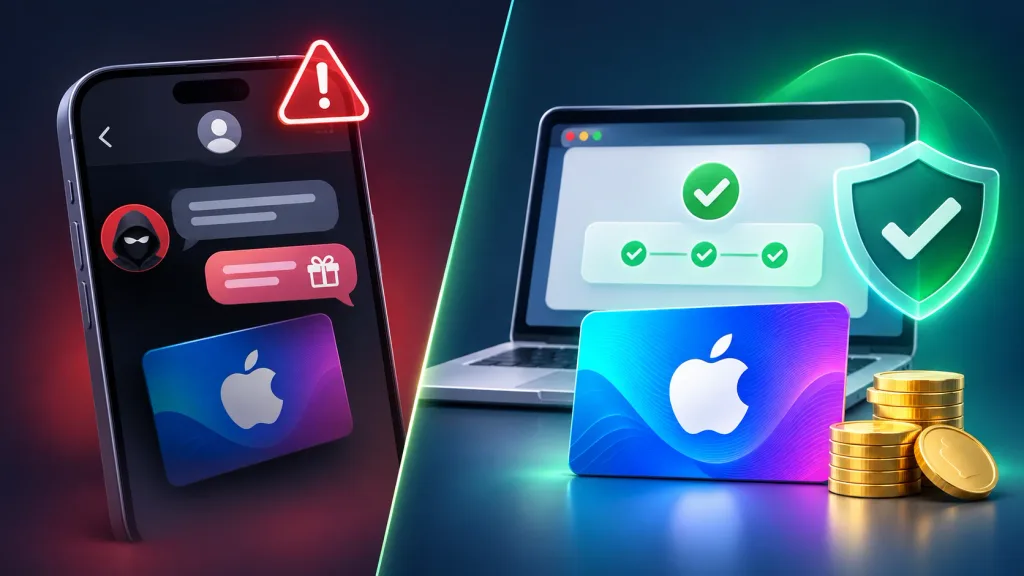
Safe selling comes down to a few habits: use a platform that shows the rate before you commit and explains its process, never send a code to someone who messaged you first, and walk away from anyone who pushes you to act fast. Scammers love Apple cards, and FTC reporting has repeatedly shown Apple among the gift cards most often demanded in scams, while no genuine business, government agency or employer will ever ask to be paid with a gift card. If a stranger offers you a “special price” for your card in a private chat, a verified Apple gift card exchange with a clear verification flow is the safer way to sell your gift cards.
Quick Tip: Save the original email or receipt until your payout arrives. It is your proof of where the card came from.
Final thought
Physical, e-gift or legacy iTunes, all three can turn into real money, and the sellers who get the best results do the same three things: they never redeem first, they confirm the balance and region, and they choose a verified route to sell your gift cards instead of gambling with strangers. A card in a drawer earns nothing, while a card sent to a trusted exchange becomes cash or crypto you can actually use. If yours is unredeemed and ready, start your Apple gift card exchange with Exchangerland today.
FAQs
Can I really sell Apple gift card for cash?
Yes. If the card is valid and unredeemed, a trusted exchange can pay you by bank transfer, PayPal or UPI, or in crypto, and the final amount depends on the current rate plus the card’s balance and region.
Which sells faster, a physical or an e-gift Apple card?
In many cases an e-gift card clears faster because the code is ready to enter, but a clean physical card with a readable code is just as quick. Condition and region matter more than format.
Do old iTunes cards still work?
Older App Store & iTunes cards generally still add value to an Apple Account, as long as the balance hasn’t been used and the region matches, so always check before you sell.
Can I sell an Apple gift card after I redeem it?
No. Once redeemed, the value becomes Apple Account balance, which Apple doesn’t let you cash out except where the law requires it, so sell the card first.
Is an Apple gift card exchange safe?
It can be when you use a verified platform that shows rates upfront, explains its process and offers support, so avoid anyone who contacts you first or rushes you.